Welcome to Limerick City
Like most of Ireland's cities, Limerick is ideal to explore on foot. Sitting right at the head of the Shannon Estuary where the famous River Shannon (Ireland's longest river) flows into the Atlantic, Limerick is the commercial and cultural capital of the Mid-West. Acting as a gateway between County Clare to the north and County Tipperary to the east.
Geographically, Limerick city center is divided into three distinct areas: English Town, Irish Town, and the modern Newtown Pery. If you're looking to take in the highlights of "The Treaty City" in one day, here is the route that we found gives you the most bang for your buck.
What's in this guide
Jump to a section:
A walking tour of Limerick City, Ireland
The route below is a circular, mostly flat walk through the city centre. It starts at People's Park, heads north across the River Shannon to King's Island, and loops back across the river to finish on O'Connell Street. Comfortably done in half a day.
People's Park
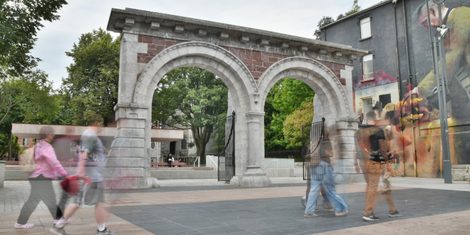
A great place to begin your walking tour is the leafy People's Park, located in the heart of the Newtown Pery area, directly across from the main train station of the city, Limerick Colbert. First opened in 1877, this charming Victorian park is the ideal spot for a peaceful inner-city stroll away from the traffic. Take in the colourful flower beds, mature trees, and the stunningly restored 19th-century bandstand.


Milk Market
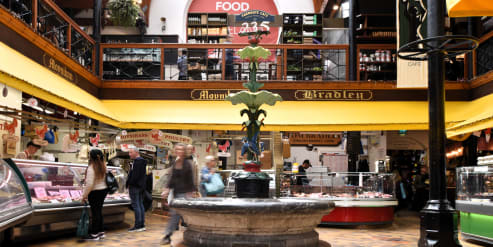
A 5-minute walk northeast from the park, through the city center, brings you to the Milk Market. Trading here since 1852, this all-weather market sits beneath a massive single-column canopy and fills up with an eclectic mix of traders: artisan food stalls and food trucks sit alongside vintage clothing racks, handmade candles, antiques, and craft bakeries. The Saturday market is the main event, a proper Limerick institution with live music and every stall in full swing. Earlier in the week it's quieter, but the coffee stalls are still open, and they serve what might just be the best mocha in Munster.
Hunt Museum
Heading north toward the water, you'll pass the Hunt Museum, housed in the old Custom House on Rutland Street. If you have time to pop inside (€12.50 for an adult ticket), you'll find a world-class collection of 2,500 objects spanning 5,000 years, including original works by Picasso, Renoir, and Jack B. Yeats. From the outside, though, it's a fairly unassuming building, distinguished mainly by the pair of brightly coloured painted horses out front.


St Mary's Cathedral
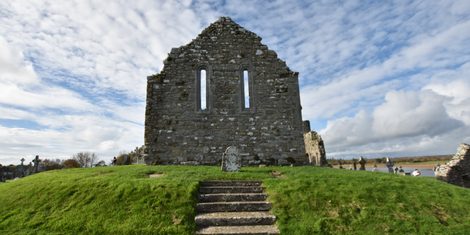
A two-minute walk brings you across the Abbey River — a small branch of the Shannon — onto King's Island, the ancient centre of Limerick City. Continue north and you'll reach St Mary's Cathedral, the oldest building in Limerick still in daily use. Take a few minutes to wander the atmospheric graveyard and complete a full 360-degree loop around the building. The 120-foot tower, added in the 14th century, is definitely the standout feature here. To get a decent picture of it, stand directly across from the front doors. Trees and bushes obscure most of the other angles, so this straight-on spot guarantees a clear shot before you head inside — or, in our case, stroll on to the next destination.
King John's Castle
A five-minute walk northeast from the Cathedral brings you to King John's Castle. Along the way, you'll pass a handful of quaint stone buildings that give this part of King's Island a real medieval vibe. Built in 1210 on the orders of King John of England, this imposing fortress sits right on the banks of the Shannon and is one of the westernmost Norman castles in Europe. The visitor centre here comes highly recommended, and the views from the castle walls, across the river, are spectacular.


Treaty Stone
Once you've explored the castle, cross the River Shannon via Thomond Bridge, leaving King's Island behind. Waiting for you just at the other end of the bridge, on the left-hand side, is the Treaty Stone. For a piece of history this momentous, it's surprisingly easy to walk right past it — especially since the stunning views of the river and castle can easily distract. But this unassuming block of limestone is how Limerick earned its nickname, "The Treaty City." Signed in 1691, the treaty finally ended a string of sieges and concluded the war between King James II and William of Orange.
O'Connell Street
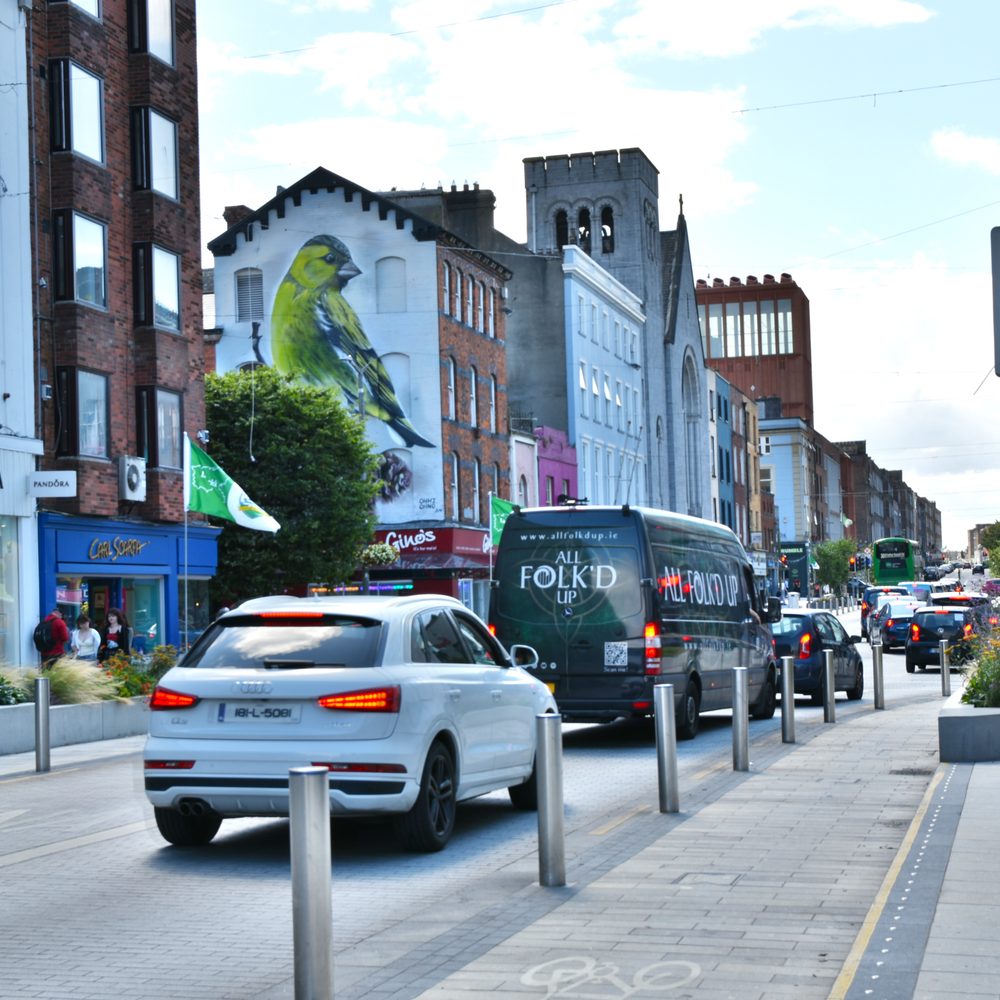
Head back across the river to O'Connell Street, the city's bustling main artery. It's a striking contrast with the medieval quarter you've just left — the grand old stone buildings of King's Island now house modern shops and fast-food chains. Green and white flags line the street, celebrating the county's recent All-Ireland hurling championship win, a friendly reminder just in case anyone from outside Limerick had forgotten. After a day on your feet, you won't have far to walk for a well-earned pick-me-up — a cold pint, a warming Irish coffee, a fresh donut, or a generous scoop of ice cream. And tucked just off the main thoroughfare on Bedford Row, there's a bronze statue of Limerick native Richard Harris — in his role as King Arthur, holding his sword upside down by the blade as a symbol of peace.

Walking tour of Limerick City Map
Gallery


This content has been reviewed and is considered up to date as of August 2026.